
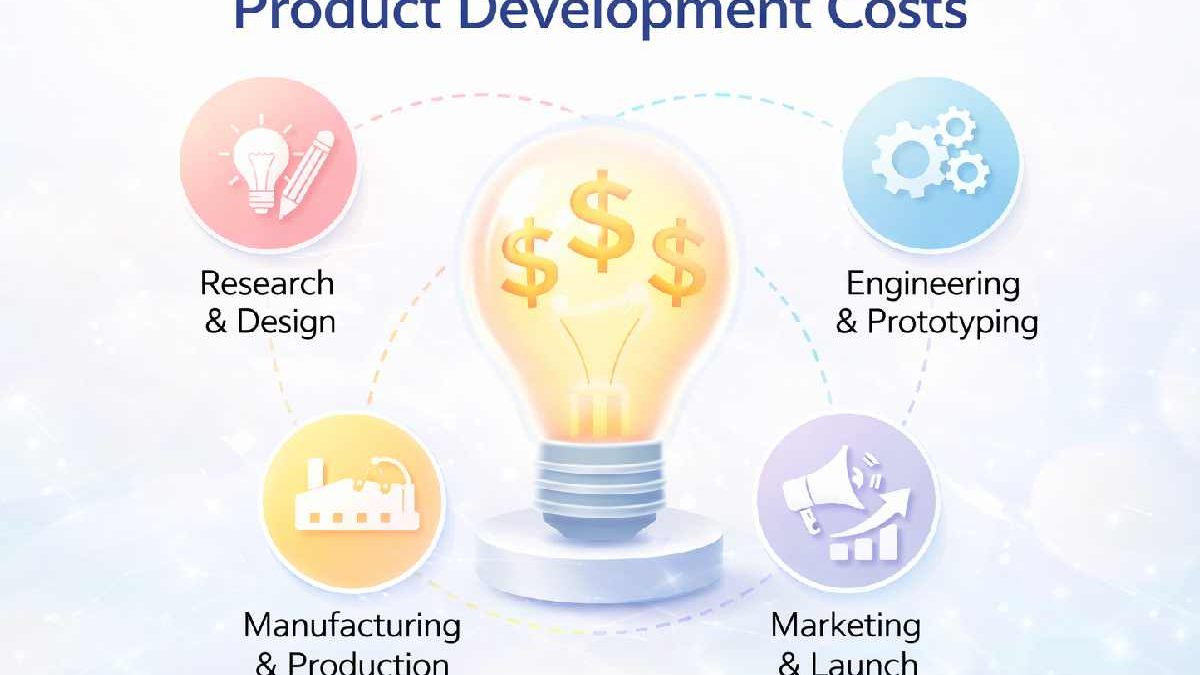
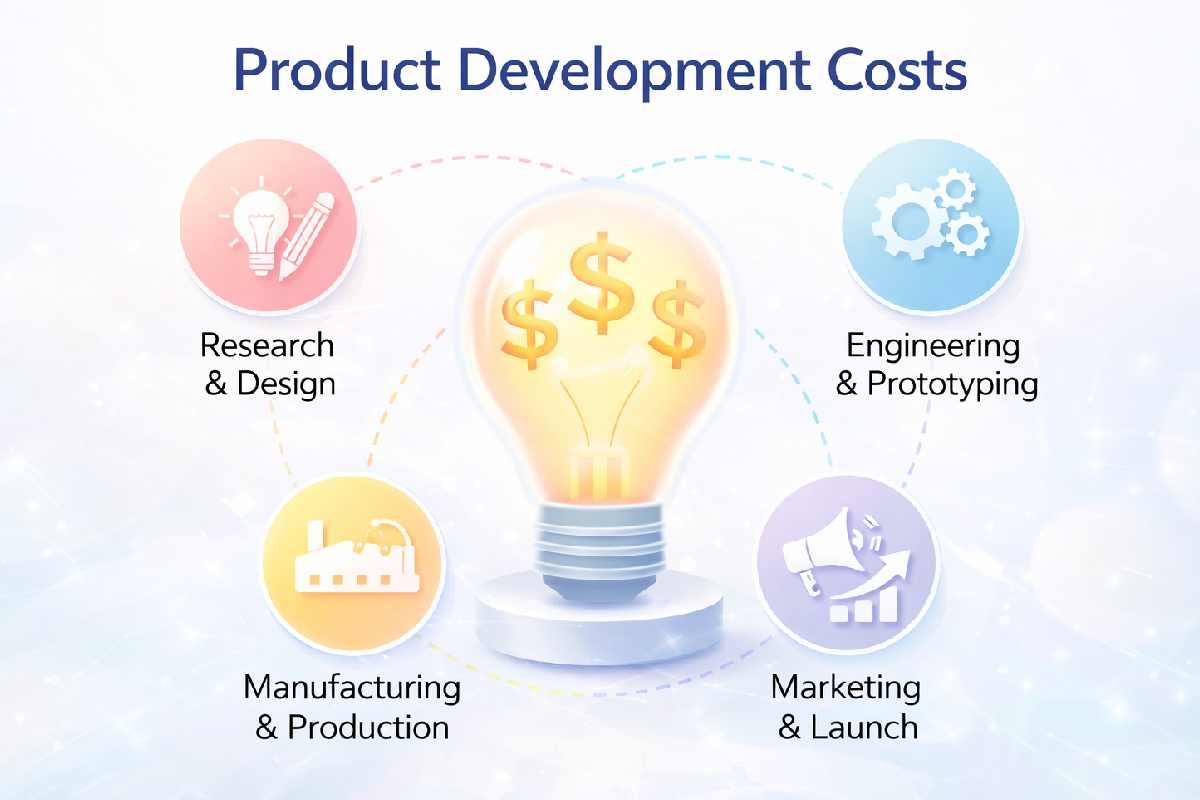
Product development costs are the total expenses required to design, build, test, and launch a new product. These costs include research, design, development, testing, marketing, and post-launch improvements. Depending on complexity, digital product development can range from $10,000 to $500,000+, while physical products may cost significantly more due to manufacturing and supply chain factors. Understanding cost components and planning budgets strategically helps businesses reduce risk and launch successful products.
Startups
Table of Contents
What Are Product Development Costs?
Product development costs refer to the total investment required to transform an idea into a finished product ready for market.
These costs include every stage such as:
- Research and ideation
- Product design
- Prototype creation
- Development and engineering
- Testing and quality assurance
- Marketing and launch
- Post-launch improvements
In simple terms, product development costs represent all financial resources needed to create, refine, and launch a product successfully.
Businesses that carefully plan these costs are more likely to:
- Launch faster
- Reduce wasteful spending
- Deliver higher-quality products
- Achieve better market success
Key Components of Product Development Costs
For businesses planning to launch a digital product, understanding the ecommerce business model can also help determine development requirements, features, technology needs, and the overall budget.
Understanding where money is spent helps companies manage budgets effectively.
| Component | Description | Typical Cost Range | Importance in Development | Example Resources |
| Market Research | Studying customer needs, market demand, and competitors before development begins. | $1,000 – $50,000 | Ensures the product solves real problems and reduces failure risk. | https://www.statista.com/topics/2157/market-research/ |
| Product Design | Creating product concepts, UI/UX design, wireframes, and visual prototypes. | $5,000 – $100,000 | Improves usability, user experience, and product appeal. | https://www.interaction-design.org/literature/topics/ui-design |
| Development & Engineering | Coding software, building backend systems, or engineering physical product components. | $10,000 – $500,000+ | Core stage where the product is actually built. | https://www.atlassian.com/software-development |
| Prototyping | Creating early models or prototypes to test product functionality. | $2,000 – $100,000 | Helps identify design issues before full-scale production. | https://www.ideou.com/blogs/inspiration/what-is-prototyping |
| Testing & Quality Assurance | Checking product performance, security, and usability through various testing methods. | $5,000 – $75,000 | Ensures reliability, reduces bugs, and improves product quality. | https://www.browserstack.com/guide/what-is-software-testing |
| Infrastructure & Tools | Purchasing development tools, software licenses, and cloud infrastructure. | $1,000 – $50,000 annually | Supports development environments and product operations. | https://aws.amazon.com/what-is-cloud-computing/ |
| Marketing & Launch | Advertising, branding, product promotion, and launch campaigns. | $10,000 – $200,000+ | Drives product visibility and customer adoption. | https://www.hubspot.com/products/marketing |
| Post-Launch Maintenance | Ongoing updates, bug fixes, feature improvements, and technical support. | 15% – 25% of initial development cost annually | Keeps the product secure, updated, and competitive. | https://www.gartner.com/en/information-technology |
Product Development Cost Breakdown Example
Below is a simplified cost distribution for a digital product such as a SaaS platform.
| Stage | Percentage of Budget |
| Market Research | 5% |
| Product Design | 15% |
| Development | 40% |
| Testing | 15% |
| Marketing | 15% |
| Maintenance | 10% |
Understanding this distribution helps companies allocate resources more efficiently.
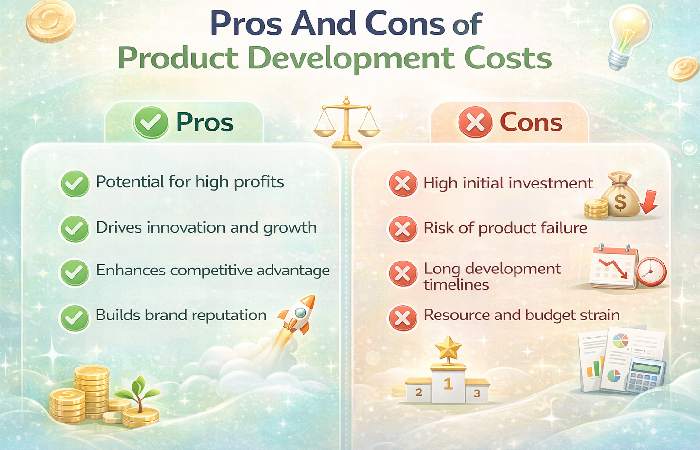
Pros And Cons of Product Development Costs
Factors That Influence Product Development Costs
Product development expenses vary widely depending on several key factors.
Product Complexity
More features require more development time and expertise.
Examples:
- AI integration
- Real-time data processing
- Cross-platform compatibility
These increase both development time and costs.
Development Team Location
Development rates vary globally.
| Region | Average Hourly Rate |
| North America | $100 – $200 |
| Western Europe | $70 – $150 |
| Eastern Europe | $40 – $90 |
| India & South Asia | $20 – $60 |
Many startups reduce costs by working with offshore teams.
Technology Stack
Advanced technologies increase costs.
Examples include:
- Artificial intelligence
- Blockchain
- Machine learning
- AR/VR
These require specialized engineers and longer development timelines.
Product Type
Different products require different resources.
| Product Type | Cost Range |
| Mobile App | $10K – $150K |
| SaaS Software | $50K – $500K |
| Hardware Product | $100K – $2M+ |
| AI Product | $100K – $1M+ |
Cost-Saving Techniques in Product Development
Reducing product development costs does not mean sacrificing quality. Many successful companies lower expenses by using smarter development strategies, efficient planning, and modern tools.
| Cost-Saving Technique | Description | Estimated Cost Reduction | Best For | Example Tools / Resources |
| Minimum Viable Product (MVP) | Build a basic version of the product with essential features before full development. | 30% – 60% | Startups, new product ideas | https://www.productplan.com/glossary/minimum-viable-product/ |
| Agile Development | Develop products in small iterations rather than one large release to avoid costly redesigns. | 20% – 40% | Software products, SaaS platforms | https://www.atlassian.com/agile |
| Outsourcing Development | Hire development teams from lower-cost countries to reduce labor expenses. | 40% – 70% | Startups and small businesses | https://www.upwork.com/resources/outsourcing-software-development |
| Open-Source Technologies | Use free open-source frameworks instead of building everything from scratch. | 20% – 50% | Web and mobile development | https://opensource.com/resources |
| Cloud Infrastructure | Use cloud platforms instead of building expensive on-premise infrastructure. | 25% – 45% | SaaS and digital products | https://aws.amazon.com/what-is-cloud-computing/ |
| No-Code / Low-Code Platforms | Use platforms that allow building applications with minimal coding. | 30% – 70% | MVPs and early-stage startups | https://www.gartner.com/en/information-technology/glossary/low-code-development-platform |
| Reusable Code Libraries | Reuse existing components instead of writing new code every time. | 15% – 35% | Large development teams | https://github.com/explore |
| Automated Testing | Use automation tools to reduce manual QA effort and time. | 20% – 40% | Software companies | https://www.selenium.dev/documentation/ |
| Early User Feedback | Collect feedback from beta users to avoid expensive redesigns later. | 15% – 30% | Consumer apps, SaaS | https://www.usertesting.com/resources |
| Strong Project Management | Proper planning prevents delays, miscommunication, and scope creep. | 20% – 35% | All product teams | https://www.pmi.org/learning/library/project-management-basics |
How to Reduce Product Development Costs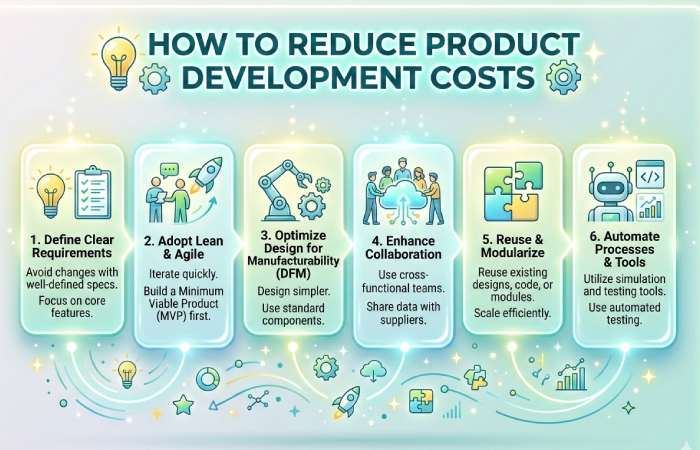
Smart companies use strategies to control expenses without sacrificing quality.
- Build a Minimum Viable Product (MVP)
Instead of launching a full product immediately, start with a Minimum Viable Product.
Benefits:
- Faster launch
- Lower development costs
- Early user feedback
Companies like Airbnb and Dropbox used MVP strategies successfully.
- Use Agile Development
Agile development focuses on incremental improvements rather than large releases.
Advantages:
- Lower risk
- Better budget control
- Faster iteration cycles
- Outsource Development
Outsourcing to experienced teams can significantly reduce costs.
Benefits include:
- Lower hourly rates
- Access to specialized talent
- Faster development cycles
- Reuse Existing Tools
Using existing frameworks and tools can save time and money.
Examples:
- Open-source libraries
- SaaS integrations
- No-code or low-code platforms
Country-Wise Product Development Costs
| Country | Avg Developer Cost (Per Hour) | Typical Product Development Cost | Key Advantages | Resource Link |
| United States | $100 – $180 | $80,000 – $500,000+ | Highly experienced engineers, advanced innovation ecosystem | https://getprojects.ai/blog/software-development-cost-by-country-2026-global-pricing-guide/ |
| Canada | $80 – $140 | $60,000 – $350,000 | Strong tech hubs like Toronto and Vancouver | https://www.orientsoftware.com/blog/offshore-software-development-rates/ |
| United Kingdom | $70 – $120 | $60,000 – $300,000 | Mature fintech and SaaS ecosystem | https://upstackstudio.com/blog/offshore-software-development-rate-by-country/ |
| Germany | $70 – $130 | $70,000 – $350,000 | Strong enterprise software development | https://www.orientsoftware.com/blog/offshore-software-development-rates/ |
| Poland | $35 – $70 | $40,000 – $200,000 | Large developer pool and strong technical expertise | https://eucalipse.com/articles/software-development-costs-by-country-2025 |
| Ukraine | $30 – $55 | $35,000 – $180,000 | Popular outsourcing destination | https://eucalipse.com/articles/software-development-costs-by-country-2025 |
| Brazil | $40 – $70 | $30,000 – $150,000 | Growing tech ecosystem and strong fintech sector | https://morsoftware.com/blog/offshore-software-development-rates-by-country |
| Mexico | $40 – $80 | $30,000 – $180,000 | Time-zone advantage for US companies | https://morsoftware.com/blog/offshore-software-development-rates-by-country |
| India | $20 – $50 | $10,000 – $100,000 | Large talent pool and cost-effective development | https://www.aalpha.net/articles/offshore-software-development-hourly-rates/amp/ |
| Vietnam | $20 – $50 | $10,000 – $120,000 | Rapidly growing outsourcing market | https://morsoftware.com/blog/offshore-software-development-rates-by-country |
| Philippines | $25 – $50 | $15,000 – $125,000 | High English proficiency and affordable rates | https://morsoftware.com/blog/offshore-software-development-rates-by-country |
| South Africa | $35 – $60 | $25,000 – $120,000 | Emerging tech hub in Africa | https://www.aalpha.net/articles/offshore-software-development-hourly-rates/amp/ |
Common Mistakes That Increase Product Development Costs
Many companies overspend due to avoidable mistakes.
Lack of Market Research
Building a product without validating demand often leads to failure.
Scope Creep
Adding too many features during development can dramatically increase costs.
Poor Project Management
Without clear timelines and responsibilities, projects often exceed budgets.
Ignoring User Feedback
Failing to incorporate user feedback can result in expensive redesigns.
Real-World Product Development Cost Examples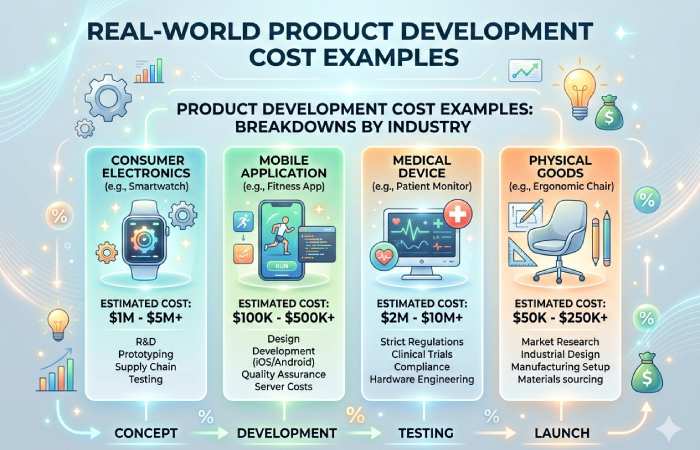
Here are some widely known examples.
Initial development cost: ~$500,000
The company focused on a simple photo-sharing MVP before expanding features.
Uber
Estimated early development cost: $1–2 million
Complex infrastructure, GPS technology, and payment systems increased costs.
Slack
Estimated development investment: $5–10 million
Large teams and multiple integrations contributed to higher development expenses.
Future Trends Affecting Product Development Costs
Several technological trends are changing how products are built.
AI-Assisted Development
AI coding tools can significantly reduce development time.
Low-Code Platforms
Businesses can now create apps faster with minimal coding.
Cloud Infrastructure
Cloud services reduce infrastructure setup costs and improve scalability.
FAQ
What are product development costs?
Product development costs are the total expenses required to design, build, test, and launch a product in the market.
Why are product development costs important?
They help businesses estimate budgets, manage resources, and ensure that products are developed efficiently without financial overruns.
How much does product development cost?
Costs vary widely depending on complexity, but digital products typically range from $10,000 to $500,000+, while hardware products can exceed $1 million.
What is the biggest expense in product development?
Development and engineering usually account for the largest portion, often 40–60% of the total budget.
How can startups reduce product development costs?
Startups can reduce costs by building an MVP, outsourcing development, using open-source tools, and adopting agile methodologies.
Final Conclusion
Understanding product development costs is essential for businesses that want to build successful products while managing budgets effectively. These costs cover everything from research and design to development, testing, marketing, and post-launch improvements. By planning strategically, focusing on MVP development, and using efficient technologies, companies can reduce unnecessary expenses while delivering high-quality products that succeed in the market.